
canvas series / Of truth and deception, 1999 – 2022
– Triptych I, triptych II, shadows behind
Ahmad Rafi refers to the stagings as performative acts. A painter hides behind his canvas. Artist and canvas are inseparably connected. The artist himself is not visible, revealing himself only through his painted canvas. The backgrounds in his Canvas Paintings are a monochrome mauvey-blue-gray. Together with the play of shadows this monochrome field is the foil in front of which the canvas develops a life of its own.
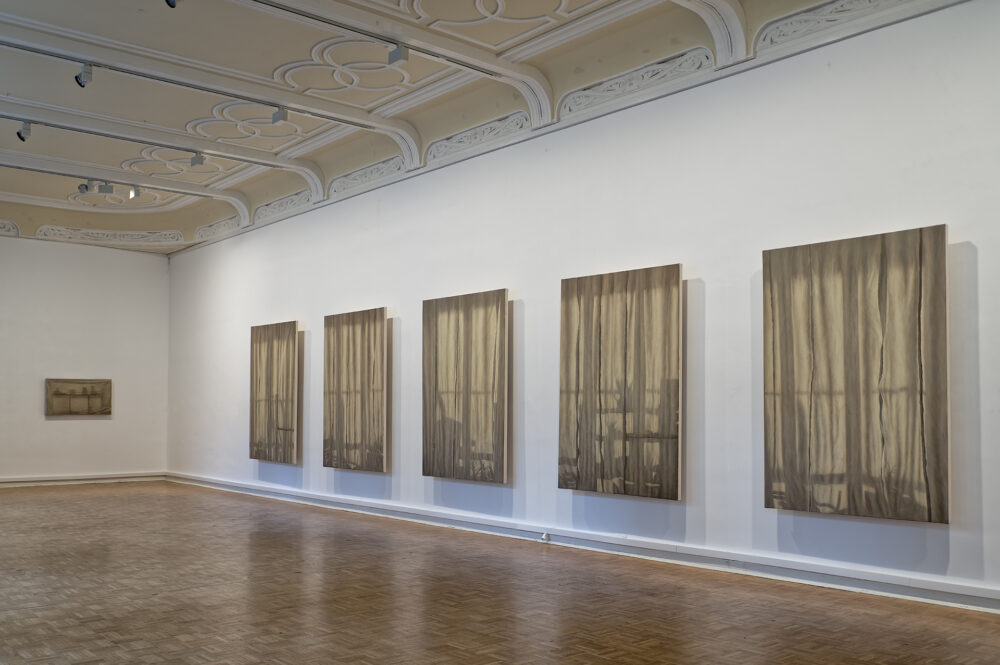
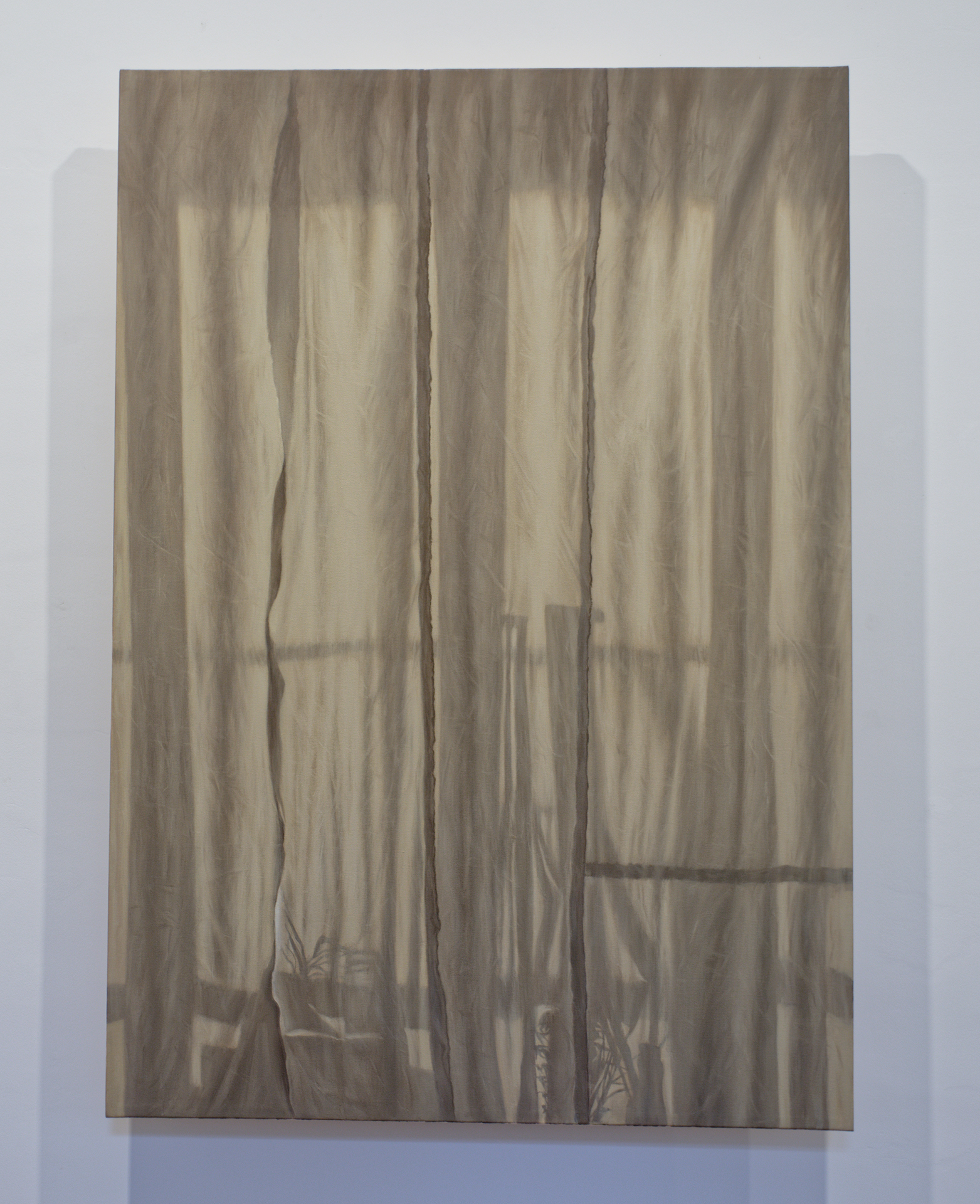
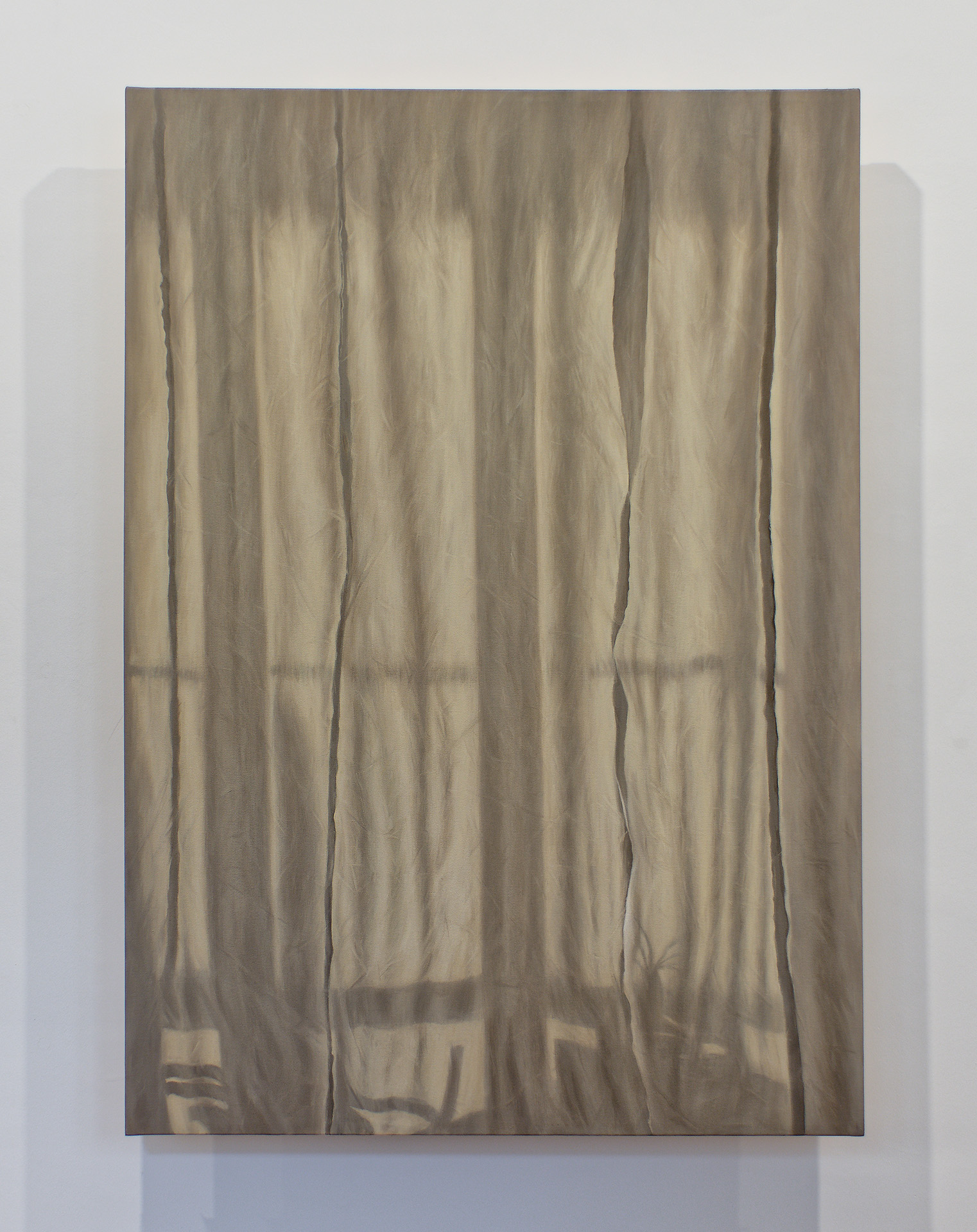
Studio Window, 2022
In large-format paintings, Ahmad Rafi addresses his studio windows. The oil paintings, each measuring 200×140 cm, realistically reflect studio windows covered with canvas. The canvases, which serve as curtains, are flooded with sunlight, revealing the silhouettes of the studio furnishings and window frames.
The substance of the canvas alone is the determining factor, thus emphasizing painterly substance. The painterly intrinsic value is the focus.

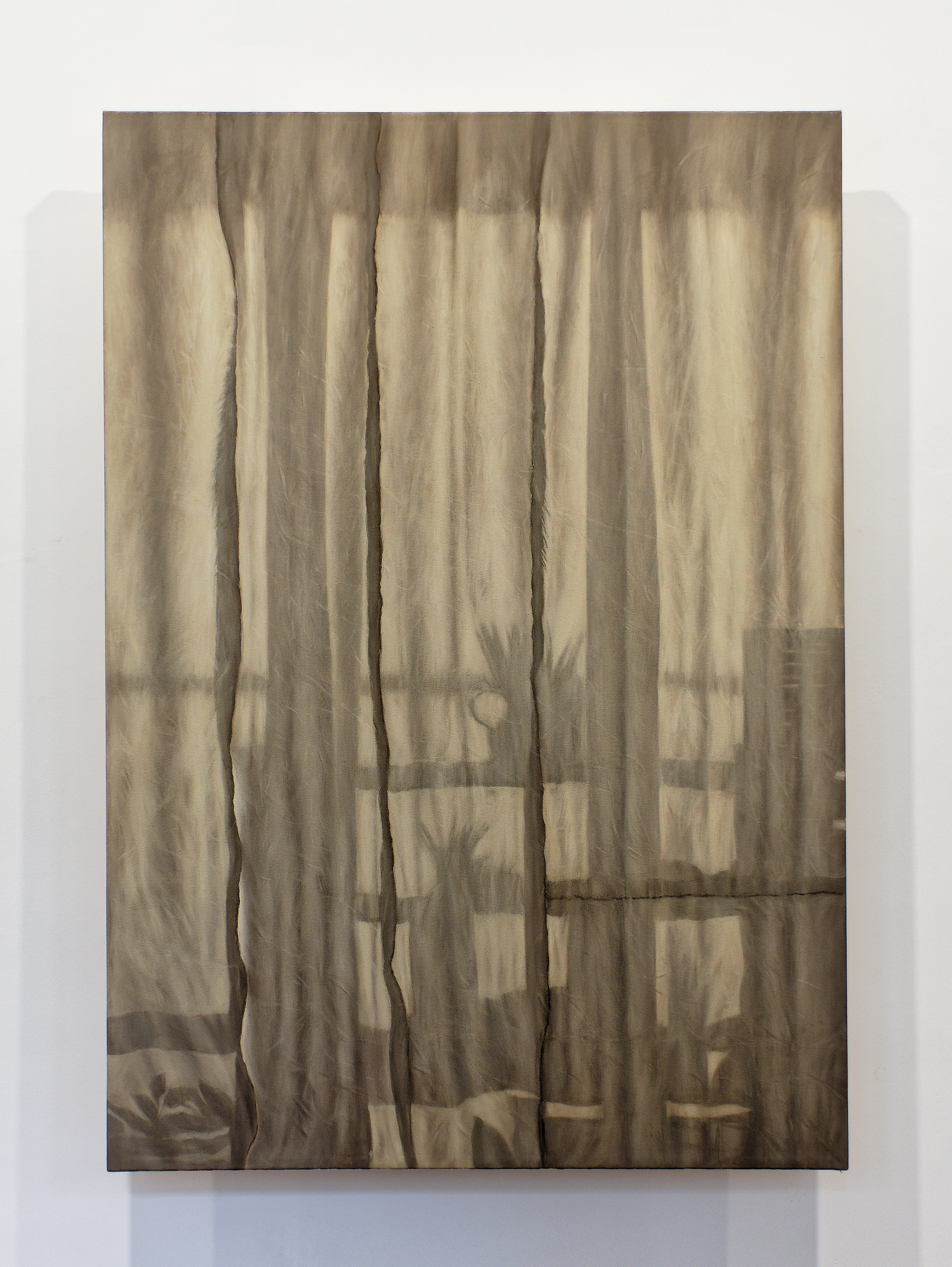
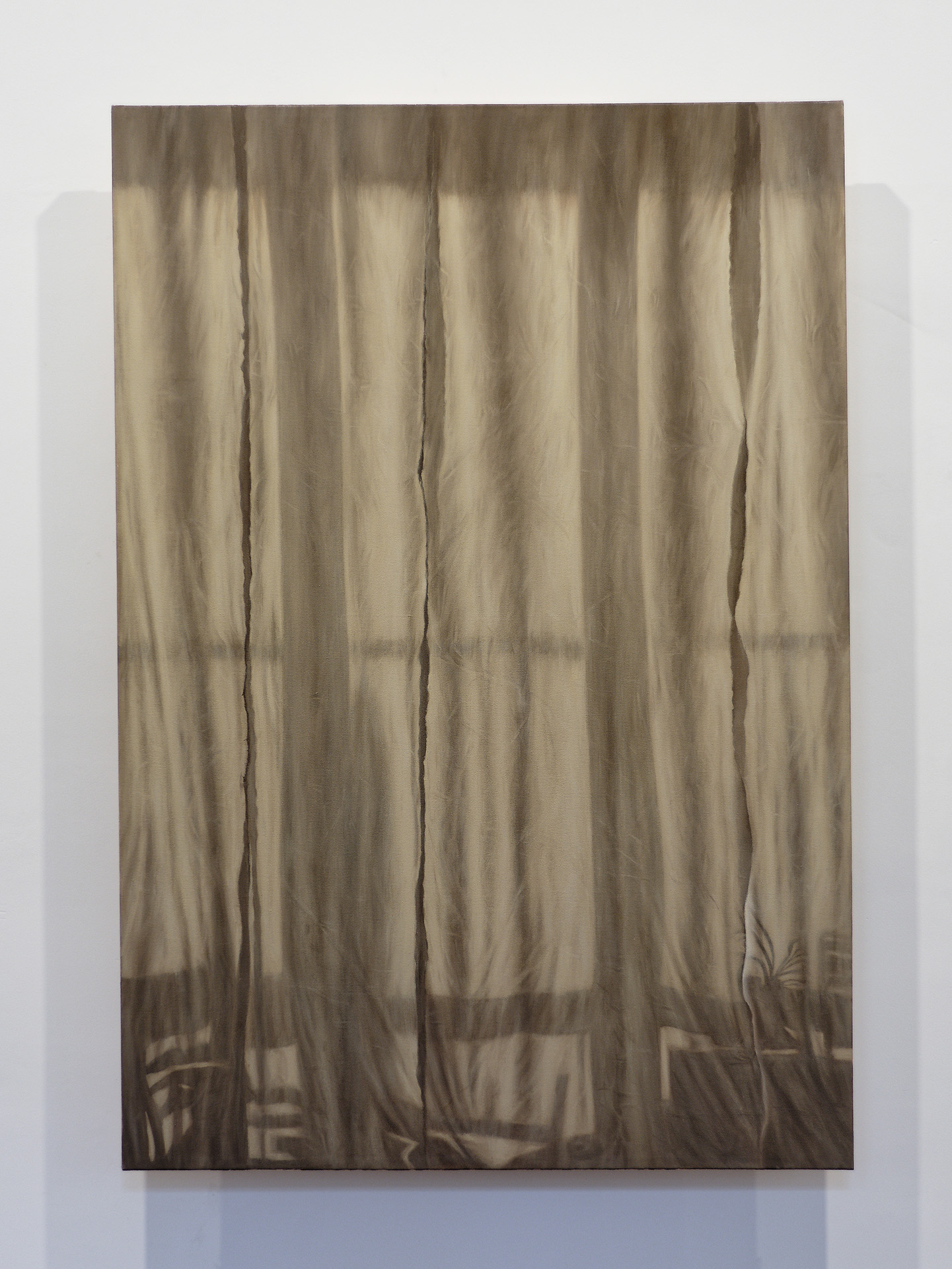
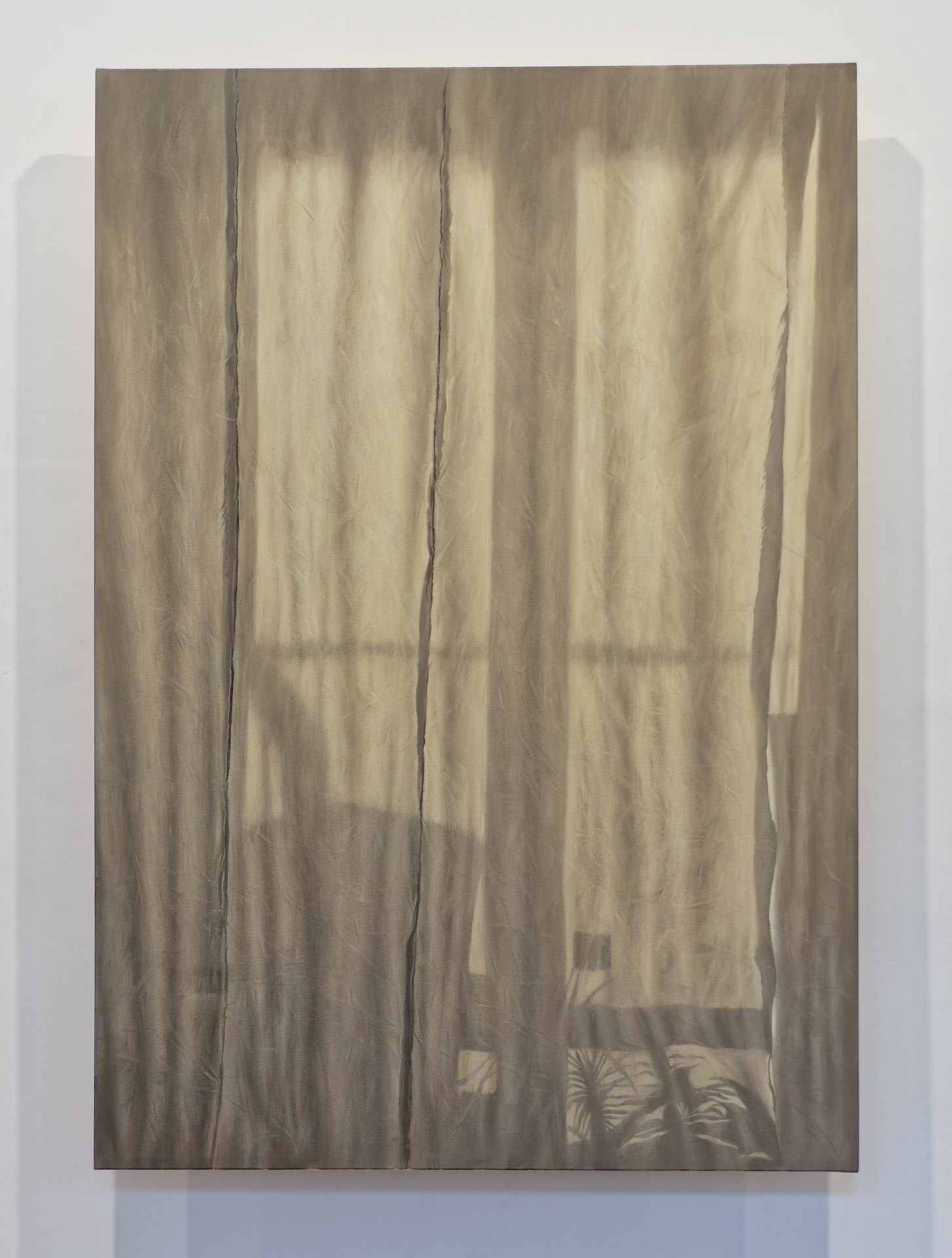


Canvas Series / Of truth and deception, 1999 – 2022
Triptych
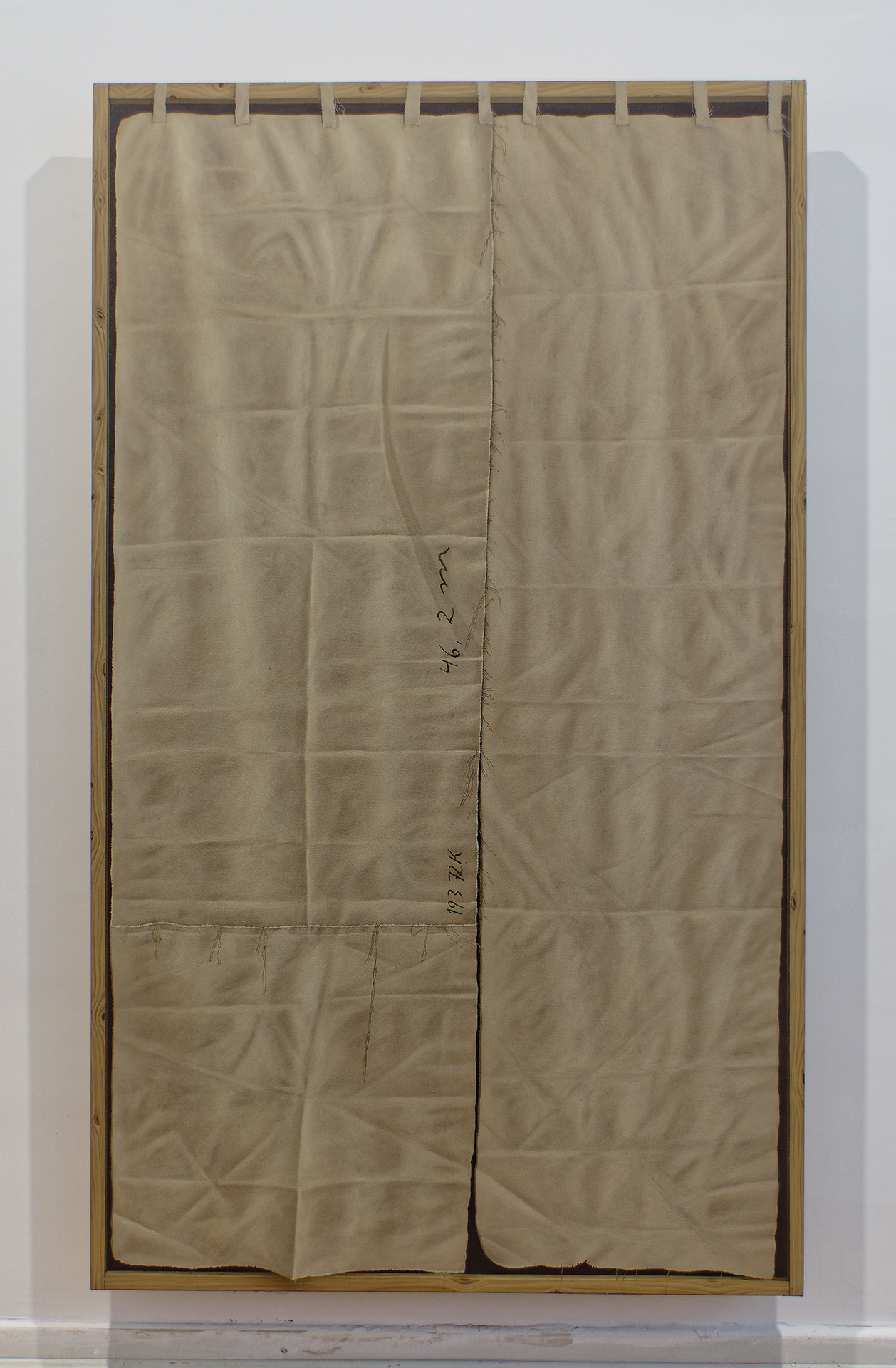
The painterly exploration of canvas as a subject and motif of the painting began in 1999. The theme is to paint the canvas itself onto the canvas. The folds and movement of the fabric are depicted on the canvas in painterly form, becoming a play with the real canvas and its image.
The paintings can be grouped into four groups. The canvas series begins with six paintings of figures that are completely or almost completely covered by canvas, so that the canvas becomes the central motif of the picture.
Rafi himself speaks of performative acts in these productions. A painter who conceals himself behind his canvas. Artist and canvas are inextricably linked. The artist himself is not visible, revealing himself only through his painted canvas.
-
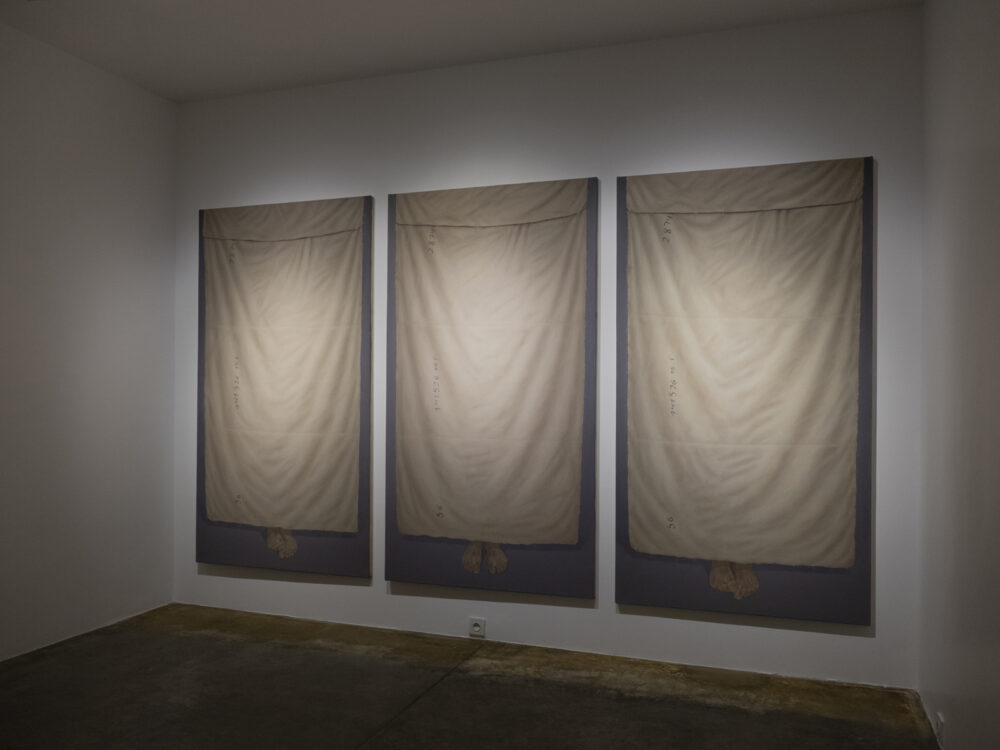
Triptych I
canvas series / Of truth and deception Lost Vision, Installation view, 2024, gallery 009821, Tehran Triptych I, Oil on canvas, 1999 each: 200 x 100 cm
-
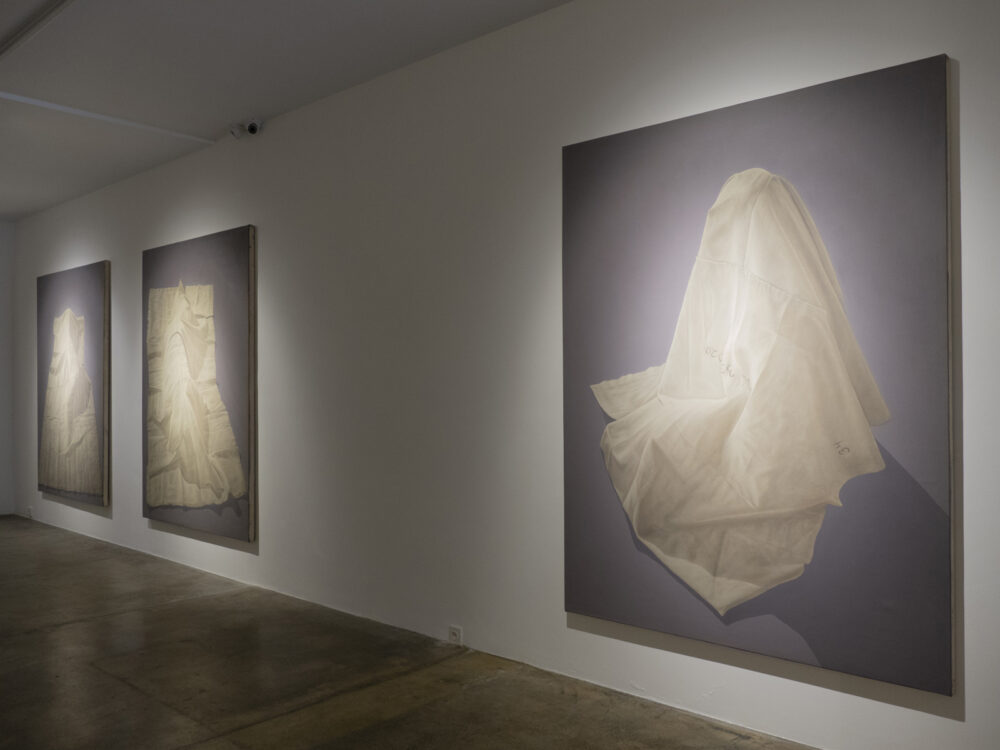
Triptych II
canvas series The second triptych was made directly after completing the first, but the position of the canvas changes. Instead of the canvas hanging from a frame it is now lying free within the space.
A Lost Vision
Studio and Exhibition Space in Dialogue
Studio and exhibition space represent creative spaces through which communication takes place. “Studio” is first and foremost a synonym for a place of emptiness—a place of deceleration. A contemplative space where the buzzing of a fly can be heard. On the other hand, the exhibition space represents a space for encounters. Two complementary components that absorb each other and merge into a unique form. In this exhibition, Ahmad Rafi visualizes the interface between studio and exhibition space.
Ever since Leon Battista Alberti (February 14, 1404, Genoa † April 25, 1472, Rome), humanist, writer, mathematician, art and architectural theorist, postulated the metaphor of the painting as an open window to the world in his theoretical treatise on painting in 1435, the window motif has been associated with an illusionary painting based on central perspective, which transfers the three-dimensional reality of the external world to the two-dimensional plane of the picture support.


Lost Vision, Installation view, 2024, Tehran, Iran